

What are the common warning signs of a dying tree?
AZ Desert Tree Care • 28 April 2025
Two men are working on a stump grinder in a backyard.

Robust trees add beauty to your property. But like all living things, trees can fall victim to age, disease, and environmental stress. A dying tree not only loses its charm, but it can also become a serious safety risk. Knowing how to spot the warning signs early can help you take action before it’s too late. At AZ Desert Tree Care, we can identify dying trees and safely remove them as needed. Here are five signs that a tree may be dying and in need of professional attention.


Bark Is Peeling or Falling Off

One of the first signs that a tree is in trouble is changes in its bark. If the bark is peeling excessively, cracking, or falling off in large pieces, it may indicate that the tree is no longer able to distribute nutrients and water effectively. Healthy bark should be relatively firm and intact. When large sections of bark are missing, the tree is often struggling to survive and may be in a state of decline.


Branches Are Brittle and Bare

Dead or dying trees often have branches that become brittle and break easily. If you notice branches snapping off with minimal pressure or failing to produce leaves during the growing season, it could be a sign that the tree is dying. Bare limbs in what should be a full canopy are a strong signal that something is wrong. In some cases, the tree may be able to recover, but if the issue is widespread, there’s a good chance it needs to be removed.


Fungal Growth at the Base

Fungi, especially growing around the base of a tree, can be an indication of internal rot. When a tree's root system begins to decay, it often invites fungal organisms to feed on the weakened tissue. While not all fungi mean the tree is dying, a large presence often points to root or trunk problems that threaten the tree’s structural integrity.


Leaves Are Discolored or Sparse

When a tree is sick or dying, its leaves often reflect that stress. Discoloration, such as yellowing or browning, especially out of season, can be a red flag. Sparse foliage or leaves that drop prematurely are additional signs that the tree is struggling. Healthy trees generally have full, vibrant canopies throughout the growing season, so noticeable changes in leaf appearance should not be ignored.


Trunk Is Cracked or Hollow

If you notice deep cracks, cavities, or even hollow sections forming in the trunk, it could be a sign that the tree is internally decaying. A hollow trunk compromises the tree’s stability, making it more likely to fall during a storm or under its own weight. Regular inspections can help catch these signs early, potentially preventing a dangerous collapse.


Arborist in Phoenix, AZ

When you need an experienced arborist in Phoenix and the surrounding area, contact AZ Desert Tree Care at 602-842-9350. Feel free to give us a call to ask for an arborist estimate in Phoenix, AZ!
by AZ Desert Tree Care 7 September 2026
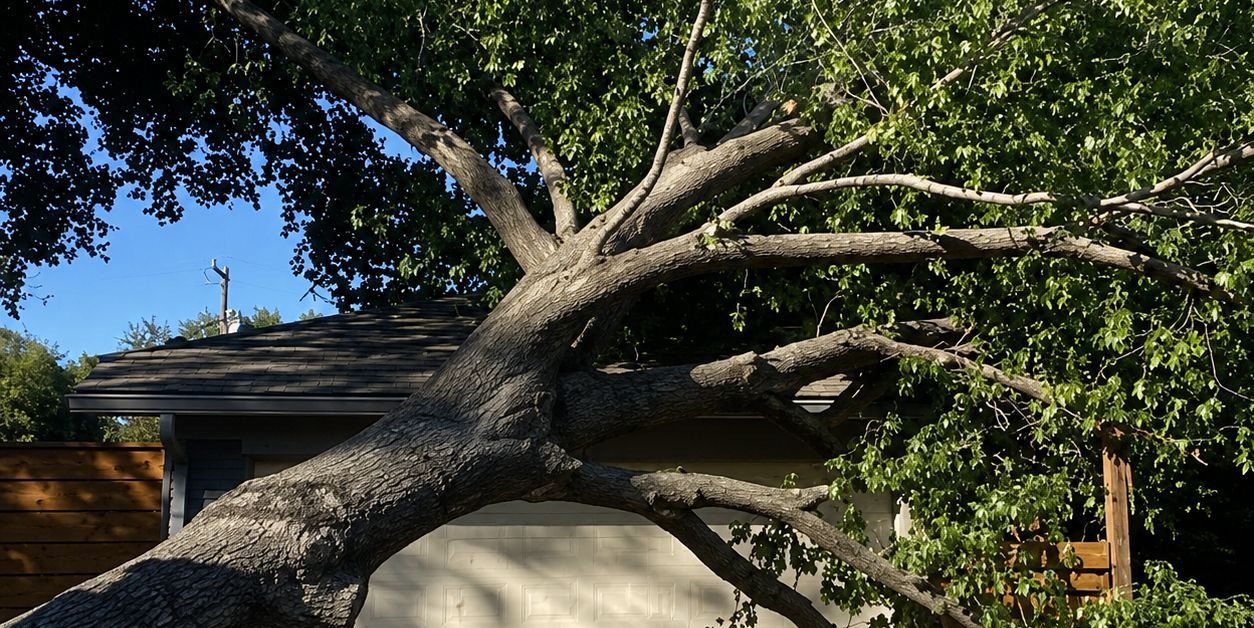
As a tree dies, its wood can become increasingly brittle and vulnerable to decay, insects, disease, and structural failure. Eventually, branches or the entire tree can fall unexpectedly, especially during severe weather. Promptly having a dead tree professionally evaluated and removed when necessary can help protect your property and the people on it. At AZ Desert Tree Care, we can identify dead trees and safely remove them. Here are four reasons to promptly remove dead trees. Protect Your Home and Property A dead tree can become a serious property hazard as its structural integrity continues to decline. A falling trunk or large branch can cause extensive damage to a roof, siding, vehicles, fences, and other structures. Removing the tree before it collapses can help prevent potentially expensive damage. A professional tree service can assess the tree's condition and determine the safest removal approach. Prevent Pests and Disease Dead and decaying trees can attract certain insects and other organisms that take advantage of weakened wood. Depending on the tree's condition, it may also harbor diseases that could affect other plants and trees nearby. Prompt removal can help reduce potential sources of pests and decay taking hold throughout your landscape. A tree professional can also advise you about whether additional measures are appropriate after removal. Prevent Emergency Removal Problems Waiting until a dead tree falls can make removal more complicated and potentially more expensive. A tree that collapses unexpectedly may land on structures, become tangled in utility lines, or block driveways and access areas. Emergency situations can also leave you dealing with cleanup and property repairs at the same time. Scheduling professional removal proactively allows the work to be planned around the tree's location and condition. Reduce the Risk of Falling Branches Dead branches can become brittle and lose their structural strength over time. Large limbs may break without warning and fall onto roofs, vehicles, fences, or areas where people spend time. Removing a dead tree eliminates the ongoing risk associated with its deteriorating branches. Tree Removal in Phoenix, AZ When you need an experienced arborist in Phoenix and the surrounding area, contact AZ Desert Tree Care at  602-842-9350  . Feel free to give us a call to ask for an arborist estimate in greater Phoenix, AZ !
by AZ Desert Tree Care 8 August 2026
At AZ Desert Tree Care, our local arborists strive to earn our clients’ complete satisfaction by providing exceptional tree services at fair rates. No matter how big or small the job, our team will work efficiently to complete the job to the highest standards. And we’re grateful when our clients offer feedback about their experiences with us. Here’s a look at some of our recent reviews. “Juan and his crew were excellent! Great communication, fantastic trimming efforts, and wonderful cleanup. Pricing was also very reasonable and affordable. Highly recommend this company.” — Jim G. “Juan and team did a great job. Our tree looks amazing and everyone was very professional. Highly recommend.” — Mike B. “Arizona Desert Tree Care is top notch! I have used them now for a few years and they always do a great job and clean up perfectly! Thank you Steven and all the other guys for working so hard! Trees look really good and balanced! So glad I got these done before the monsoons hit. We have over 15 Mesquites that drop a lot of bean pods… So glad they’re going to be less bean pods this year!” — Kathy G. “My experience with AZ Desert Tree Care was 10/10 from the beginning. Truly knowledgeable and professional from the estimation process through clean up. They trimmed 3 large trees, 2 Palo Breas and a Mesquite, removed a tree in the backyard that was overhanging our pool, and fertilized all of our large trees. If not for the missing and trimmed trees you wouldn't even know they had been here. Cannot recommend them highly enough, best tree care in AZ!” — Jeff C. “Great experience. From the woman who manages the office to the arborist to the 6-man work crew, all totally professional. Reasonable prices too. My highest recommendation.” — Jeff W. Arborist in Phoenix, AZ For an experienced arborist in Phoenix and the surrounding area, contact AZ Desert Tree Care at  602-842-9350  . We provide expertise with both residential and commercial tree care in Phoenix. Feel free to give us a call to arrange an arborist estimate in greater Phoenix, AZ!
by AZ Desert Tree Care 5 July 2026
Phoenix summers are known for intense monsoon storms that can bring strong winds and heavy rain. While healthy trees often withstand these conditions, weakened or damaged trees may be at a much higher risk of falling. A collapsing tree can cause significant property damage, vehicle damage, and injury. Knowing the warning signs can help homeowners take action before the next storm arrives. At AZ Desert Tree Care, our local arborists can identify hazardous trees and safely remove them as necessary. Here are four signs a tree may be more likely to crash down during a Phoenix summer storm. A Noticeable Lean A tree that suddenly develops a lean may have structural or root problems. While some trees naturally grow at an angle, a new or worsening lean can indicate instability. Strong monsoon winds can easily push an already compromised tree past its breaking point. Large Dead or Dying Branches Dead branches are more likely to snap during high winds and can signal broader health issues within the tree. If you notice large limbs with no leaves, brittle wood, or significant dieback in the canopy, the tree is likely struggling. These weakened branches can become dangerous projectiles during storms. Cracks in the Trunk Cracks, splits, or cavities in the trunk often indicate structural weakness. These problems reduce the tree's ability to withstand strong winds and heavy rain. A cracked trunk can fail suddenly, especially when subjected to the intense weather conditions common during Phoenix monsoon season. Root Damage or Soil Movement A tree's root system provides the foundation that keeps it upright. Signs such as exposed roots, fungal growth near the base, soil heaving, or recent construction damage can indicate compromised roots. Trees with weakened root systems are far more likely to topple during severe storms. Tree Removal in Phoenix, AZ When you need an experienced arborist in Phoenix and the surrounding area, contact AZ Desert Tree Care at  602-842-9350  . Feel free to give us a call to request an arborist estimate in greater Phoenix, AZ !
by AZ Desert Tree Care 6 June 2026
Hazardous trees can pose serious risks to homes, vehicles, utility lines, and personal safety if they are not properly addressed. Storm damage, disease, and decay can all increase the likelihood of a tree or large branch falling suddenly. Because hazardous tree removal often involves complex safety concerns, many property owners have questions about how the process works and when professional help is necessary. At AZ Desert Tree Care, we’re happy to answer your questions about hazardous tree removal in the greater Phoenix, AZ area. What Makes a Tree Hazardous? A tree is generally considered hazardous when it shows signs of structural weakness or instability that increase the risk of failure. Common warning signs include dead branches, deep cracks in the trunk, hollow sections, severe leaning, and root damage. Trees weakened by disease, insect infestations, or storm damage may also become dangerous. A professional can evaluate the condition of a tree and determine whether removal is recommended. Why Should Hazardous Trees Be Removed Quickly? Hazardous trees often become more unstable as time passes, especially during strong winds or heavy rain. Falling branches or collapsing trees can cause major property damage and create serious safety hazards for people nearby. Prompt removal helps reduce risks and prevent emergency situations. Is Hazardous Tree Removal Dangerous? Removing a hazardous tree can be extremely dangerous without proper training and equipment. Damaged or unstable trees may behave unpredictably during the removal process, increasing the risk of falling limbs or sudden collapse. Trees located near homes, fences, vehicles, or power lines require careful planning and specialized removal techniques. Professional tree removal crews have the experience, safety gear, and equipment needed to complete the job safely. Should the Stump Be Removed Too? Many homeowners choose to remove the stump after a hazardous tree is cut down. Leftover stumps can become tripping hazards, interfere with landscaping, and attract pests such as termites and ants. Stump grinding removes the visible portion of the stump below ground level and helps create a cleaner appearance. Where Can I Find Hazardous Tree Removal in Phoenix, AZ? For expert tree removal in Phoenix and the surrounding area, contact AZ Desert Tree Care at  602-842-9350  . Feel free to give us a call to request an arborist estimate in greater Phoenix!
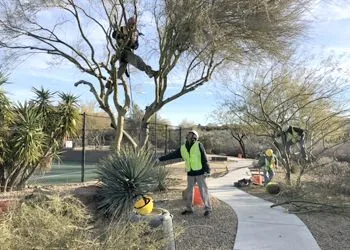
Person in neon vest trims desert plants along a curved path in a park.
by AZ Desert Tree Care 6 May 2026
Learn 5 signs your tree may be dying. Contact AZ Desert Tree Care for expert evaluation & services in Phoenix, AZ.
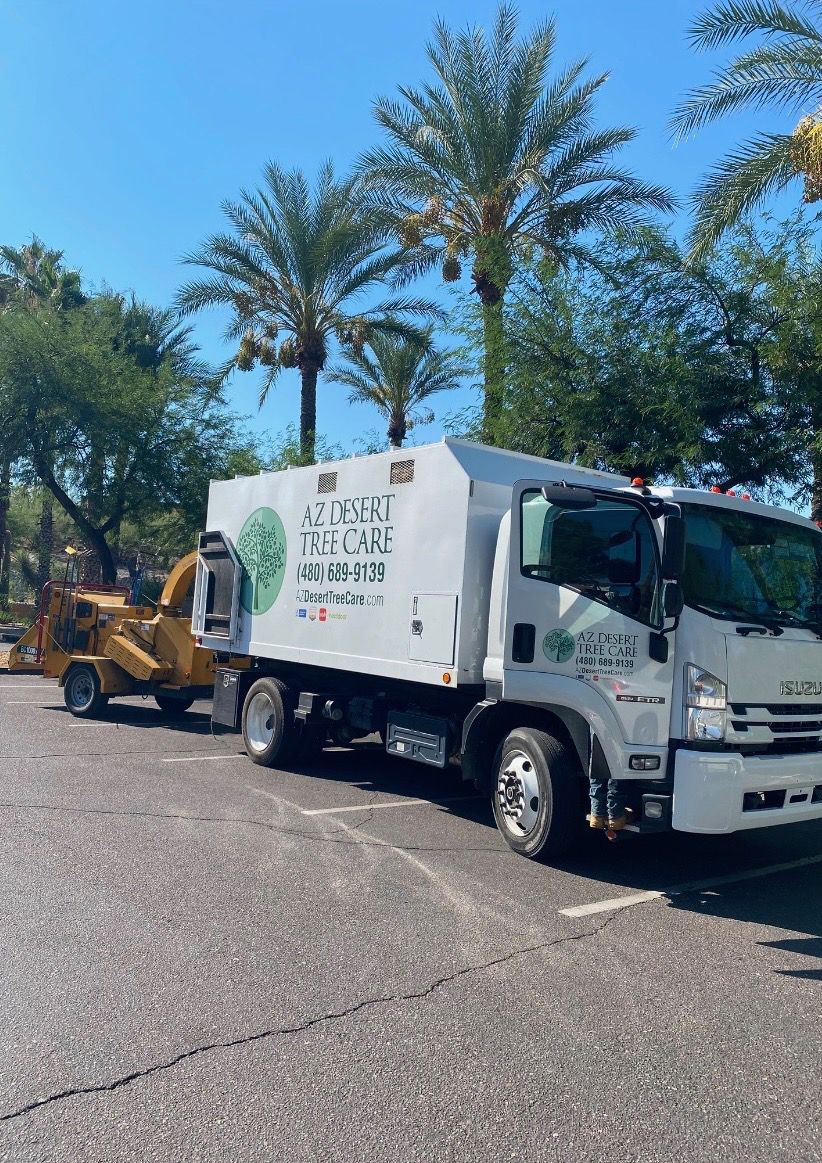
A white tree service truck parked in a sunny lot with a yellow wood chipper attached to the back.
by AZ Desert Tree Care 5 April 2026
While tree removal is sometimes a last resort, it’s often necessary to protect people and property. Professional arborists are trained to assess tree conditions and determine when removal is the safest and most appropriate option. At AZ Desert Tree Care, we provide expert tree removal in the greater Phoenix area. Here are four common reasons that trees need to be removed by arborists. Severe Disease or Decay One of the most common reasons for tree removal is advanced disease or internal decay. Trees can be affected by fungal infections and other diseases that weaken their structure over time. In many cases, these issues are not fully visible from the outside. As decay progresses, the tree may become unstable and more likely to fail. When a tree’s health cannot be restored, removal is often the safest solution. Proximity to Structures or Utilities Trees that grow too close to homes, buildings, or utility lines can create hazards. Overhanging branches may damage roofs, siding, or windows, while roots can interfere with foundations and underground pipes. Trees near power lines are particularly dangerous, as they can lead to electrical hazards or outages. In these cases, removal may be necessary to protect both property and safety. Dead/Dying Trees A dead or dying tree is no longer structurally sound and can become unpredictable. Without healthy growth, the tree’s wood becomes brittle and more prone to breaking. Dead trees can shed branches or fall entirely, especially during strong winds. Removing a dead tree promptly helps eliminate a potential hazard. Pest Infestations Certain pests can cause significant damage to trees by feeding on wood or disrupting nutrient flow. Severe infestations can weaken a tree’s internal structure and make it more susceptible to disease. In some cases, removing an infested tree is necessary to prevent the spread of pests to nearby healthy trees. Arborists can assess the severity of the infestation and determine whether removal is the best course of action. Tree Removal in Phoenix, AZ When you need an experienced arborist in Phoenix and the surrounding area, contact AZ Desert Tree Care at  602-842-9350  . We provide expertise with both residential and commercial tree services in Phoenix . Feel free to give us a call to arrange an arborist estimate in Phoenix, AZ !
Show More →