

5 Indications that a Tree May Be Dying and Should Be Evaluated by an Arborist
Recognizing the early warning signs of a dying tree can help you take action before it becomes a safety hazard or spreads issues to nearby plants. At AZ Desert Tree Care, we can identify dying trees and safely remove them when necessary. If you notice any of the following symptoms, it’s wise to have the tree evaluated by a professional arborist.
Sparse/Thinning Foliage
Healthy trees typically produce a full canopy of leaves during the growing season. If you notice sections of your tree with sparse or missing foliage, it may indicate that the tree is under stress or struggling to survive. This is especially concerning if the issue persists through multiple seasons or worsens over time. Thinning leaves often signal problems with nutrient uptake, root health, or disease.
Dead Branches
Branches that are dry, brittle, and easily snap off are a clear sign of decline. While it’s common for trees to shed a few small branches, an increase in dead limbs—especially in the upper canopy—can indicate serious health issues. Dead branches not only reflect poor tree health, but also pose a safety risk if they fall unexpectedly.
Peeling or Damaged Bark
The bark of a tree serves as a protective layer, and when it begins to peel or fall away, it can be a serious sign of trouble. Large sections of missing bark or deep splits may expose the inner wood, leaving the tree vulnerable to pests and disease. In some cases, damaged bark can indicate internal decay or structural weakness.
Fungal Growth Around the Base
The presence of fungi growing near the base of a tree often points to internal rot. Fungi thrive on decaying organic matter, so their appearance can mean that the tree’s root system or trunk is deteriorating. This type of decay can significantly weaken the tree, increasing the likelihood of it falling.
Leaning
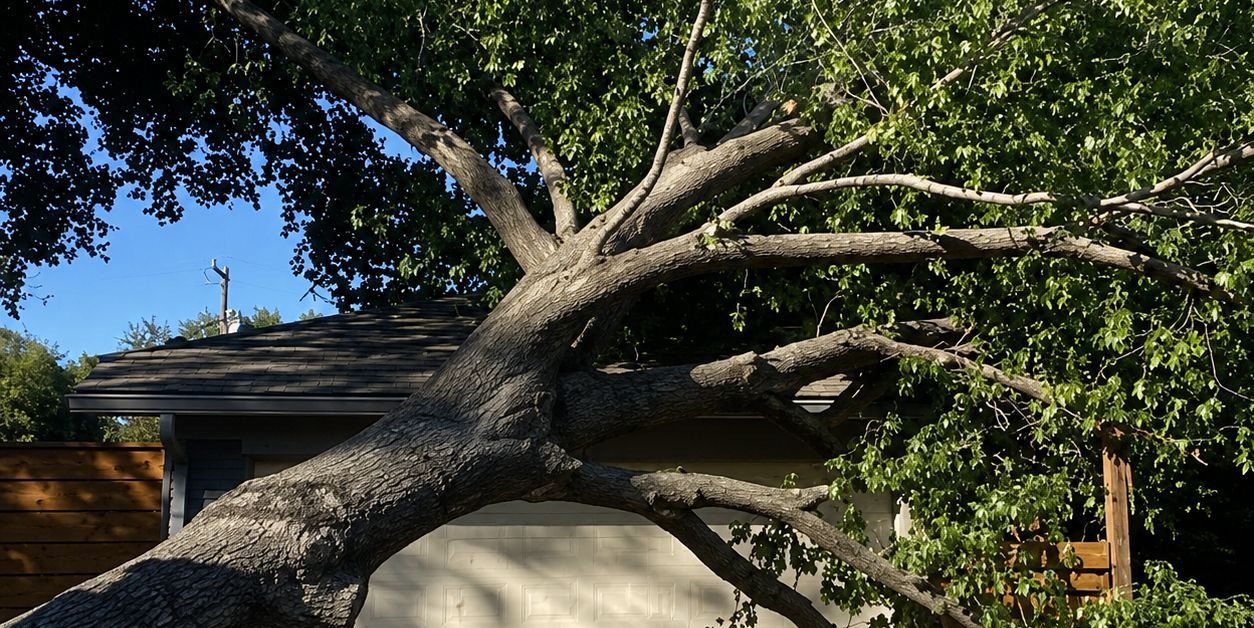
A tree that suddenly begins to lean or shows signs of instability should be taken seriously. While some trees naturally grow at an angle, a noticeable shift in position can indicate root damage or structural failure. Cracked soil around the base or exposed roots may further suggest that the tree is no longer securely anchored.
Arborist in Phoenix, AZ
When you need an experienced arborist in Phoenix and the surrounding area, contact AZ Desert Tree Care at 602-842-9350. Feel free to give us a call to ask for an arborist estimate in Phoenix, AZ!